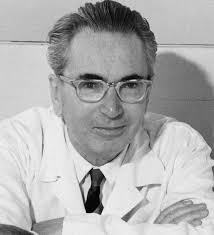
Near-Death Experiences as a Catalyst for Logotherapeutic Awakening: An Existential Analysis
By: John Piedrahita
Near-death experiences (NDEs) represent a unique confrontation with mortality that can evoke profound existential transformation. While logotherapy is often framed primarily as a psychotherapeutic intervention, Viktor Frankl (1959/2006) emphasized that it is more fundamentally an orientation toward life rooted in the inherent human quest for meaning. Thus, logotherapy transcends the boundaries of psychotherapy by offering an existential framework for understanding and responding to life’s ultimate concerns—including death, freedom, isolation, and meaninglessness (Yalom, 1980).
Experiencing the abrupt threat of death through an NDE can propel individuals into what Karl Jaspers termed “boundary situations”—moments in which the taken-for-granted structures of existence dissolve, forcing an encounter with one’s finitude (Yalom, 1980). Such moments often bring about a radical reevaluation of life’s purpose, echoing Frankl’s assertion that the ultimate question is not “What can I expect from life?” but rather “What does life expect from me?” (Frankl, 2006, p. 77).
Empirical and phenomenological research on NDEs supports this notion: individuals frequently report a distortion of temporal experience—time slowing or standing still—as they approach perceived death, an altered state of consciousness that catalyzes a heightened awareness of what is truly meaningful (Wharne, 2023). This disorientation in time mirrors the existential shock described by Frankl (1969), who observed that intense encounters with mortality can awaken the individual to the “defiant power of the human spirit” and the urgency of assuming responsibility for their own meaning .
Irvin Yalom (1980) emphasized death awareness as central to existential psychotherapy, describing it as a gateway to authenticity by dissolving illusions of personal invulnerability. From a logotherapeutic perspective, this confrontation with death can rupture the existential vacuum—a pervasive sense of meaninglessness—and ignite a renewed commitment to live intentionally. As Frankl’s own experiences in concentration camps demonstrated, the will to meaning remains the deepest driver of human resilience, and meaning can be discovered even in the face of inevitable mortality (Frankl, 2006).
Furthermore, near-death experiences often elicit reports of confronting either a profound sense of peace or, conversely, an existential void or abyss. This polarity resonates with Frankl’s (1967) observation that meaninglessness can evoke despair, yet it simultaneously offers the opportunity to choose a new orientation toward life—what he termed “tragic optimism,” the ability to say “yes” to life despite its tragic aspects (Frankl, 1984).
Ultimately, near-death experiences exemplify the highest form of logotherapeutic intervention not orchestrated by a therapist, but by life itself: they confront the individual with the reality of their mortality, awaken an acute awareness of meaning, and challenge them to live responsibly and purposefully. As Frankl wrote, “He who has a why to live can bear with almost any how” (Frankl, 2006, p. 104)—a sentiment confirmed in the transformative potential of those who have come face-to-face with their own death.
(c)2025 John Piedrahita
References
Frankl, V. E. (1967). Psychotherapy and existentialism: Selected papers on logotherapy. Washington Square Press.
Frankl, V. E. (1984). The unheard cry for meaning: Psychotherapy and humanism. Simon & Schuster.
Frankl, V. E. (2006). Man’s search for meaning (4th ed.). Beacon Press.
Wharne, S. (2023). Navigating threshold concepts and learning outcomes in counselling and psychotherapy training: An existential paradox. Existential Analysis, 34(1), 161–173.
Yalom, I. D. (1980). Existential psychotherapy. Basic Books.
 Logotherapy Research Group South Florida
Leave a comment